

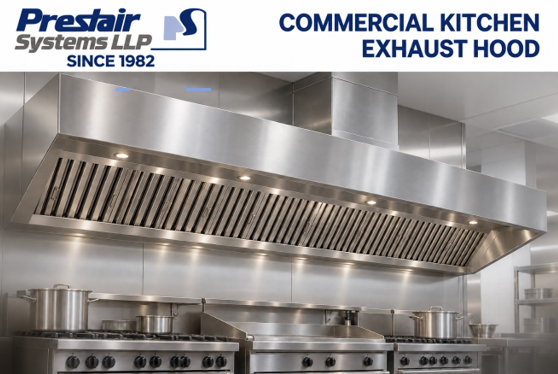
Commercial Kitchen Exhaust Hood: How to Choose the Right Ventilation System for Your Restaurant
A professional kitchen produces much more than food. During daily cooking operations, heat, steam, grease-laden vapours, smoke, and cooking odours can build up rapidly, especially when multiple pieces of equipment operate simultaneously.
This is why a properly planned commercial kitchen exhaust hood is an essential part of restaurant kitchen design.
Whether you are operating a restaurant, hotel, QSR, café, sweet shop, institutional kitchen, industrial canteen, or high-volume food production facility, an effective ventilation system helps manage the cooking environment and supports safer, more comfortable working conditions.
The right exhaust hood should not be selected purely according to appearance or price. Cooking equipment, heat load, kitchen layout, hood dimensions, exhaust requirements, ducting, make-up air, maintenance access, and local requirements all need to be considered together.
At Prestair Systems, commercial kitchen equipment and kitchen planning solutions include professional ventilation and hood systems designed according to operational requirements.
- Why a Commercial Kitchen Exhaust Hood Is Essential
The cooking line is usually one of the hottest and busiest areas of a professional kitchen.
Burners, fryers, griddles, ovens, tandoors, boiling equipment, and other cooking appliances can produce significant amounts of heat, vapour, grease, and smoke.
Without appropriate extraction, these can accumulate inside the kitchen.
A properly designed commercial kitchen exhaust hood captures cooking emissions above the equipment and helps direct them into an exhaust system.
Heat Management
High kitchen temperatures can make working conditions uncomfortable for chefs and support staff.
Effective ventilation helps remove a portion of the heat generated by cooking processes and contributes to a more manageable kitchen environment.
Grease and Vapour Control
Heavy cooking processes can release grease-laden vapours into the air.
Commercial kitchen hoods generally use filters or other grease-management components to capture grease before air moves further into the exhaust system.
Better Working Environment
Kitchen employees may spend several hours working near cooking equipment.
Proper ventilation can help maintain a more comfortable environment by reducing excessive smoke, fumes, heat, and cooking odours around the cooking line.
Kitchen Cleanliness
Grease vapour that is not captured effectively can settle on ceilings, walls, equipment, and nearby surfaces.
A well-planned exhaust system therefore also supports easier kitchen maintenance.
Explore commercial kitchen solutions from Prestair Systems.
2. Different Types of Commercial Kitchen Hoods
Not every kitchen requires the same hood configuration.
The correct system depends on equipment placement, cooking processes, kitchen architecture, and available space.
Wall-Mounted Hoods
Wall-mounted hoods are commonly installed above cooking equipment positioned against a wall.
They can work well in restaurant kitchens where the cooking line follows the perimeter of the room.
Island Hoods
When cooking equipment is positioned in the centre of a kitchen rather than against a wall, an island-type commercial kitchen hood may be required.
Because cooking emissions can escape in multiple directions, island hoods often need careful sizing and positioning.
Box-Type Hoods
Box-style hood designs provide a straightforward extraction solution for selected professional kitchen applications.
The exact configuration should be determined according to the cooking load and equipment positioned underneath.
Profile Hoods
Profile hoods can provide a more streamlined design while supporting professional kitchen ventilation requirements.
The selection between different hood configurations should be based on technical requirements rather than appearance alone.
Prestair provides different commercial hood configurations as part of its professional kitchen equipment range.
3. Factors to Consider Before Choosing a Kitchen Exhaust Hood
Selecting the correct commercial kitchen exhaust hood requires more than measuring the length of the cooking line.
Type of Cooking Equipment
Cooking equipment produces different levels of heat, vapour, smoke, and grease.
A fryer or heavy-duty range may have different ventilation requirements from lighter cooking appliances.
The hood therefore needs to be designed according to the actual equipment underneath it.
Hood Size
The hood needs appropriate coverage around the cooking equipment to capture rising heat and vapours effectively.
An undersized hood may allow emissions to escape into the surrounding kitchen.
Exhaust Airflow
Airflow requirements depend on several factors, including hood dimensions, cooking load, equipment type, and kitchen configuration.
More airflow is not automatically better. Excessive extraction can increase energy demand and affect kitchen air balance.
Make-Up Air
When large volumes of air are removed from a kitchen, replacement air must enter the space.
This is why professional ventilation planning should consider both exhaust air and make-up air.
Poor air balance can create uncomfortable drafts or negatively affect system performance.
Ducting
Duct routes should be considered early during commercial kitchen layout planning.
Long, complicated, or poorly positioned duct paths can create installation and maintenance challenges.
Planning hood and duct locations before finalizing the kitchen can help avoid costly modifications later.
Cleaning and Maintenance Access
Commercial exhaust systems need regular cleaning.
Filters, grease collection areas, ducting, and accessible components should be designed with maintenance in mind.
Equipment that is difficult to reach is more likely to be neglected.
4. Integrating Ventilation into the Complete Commercial Kitchen Design
One of the biggest mistakes in restaurant development is treating ventilation as something that can be added after all cooking equipment has been installed.
The commercial kitchen exhaust hood should be planned together with the kitchen layout.
Cooking stations, exhaust hoods, electrical systems, gas infrastructure where applicable, ductwork, refrigeration, drainage, and staff movement all need to work as a coordinated system.
Plan Before Installation
The kitchen designer should identify where heat-producing equipment will be positioned before finalizing hood locations.
Moving a fryer, burner, or tandoor later can affect the ventilation design.
Consider Equipment Expansion
Restaurant menus often change.
Businesses may add another fryer, griddle, cooking range, or specialized appliance as production increases.
If future growth is expected, the kitchen should be planned with possible equipment expansion in mind.
Coordinate Ventilation and Workflow
Large hood systems should not interfere with storage, lighting, service access, staff movement, or maintenance.
This is why commercial kitchen planning is important.
Instead of selecting cooking equipment, hoods, refrigeration, and preparation systems independently, they should be considered as parts of one operational kitchen.
Energy Efficiency
An efficient ventilation system should provide sufficient extraction for cooking requirements without unnecessary energy consumption.
Kitchen owners should therefore focus on appropriate system design rather than simply installing the largest available exhaust equipment.
Final Thoughts
A properly designed commercial kitchen exhaust hood is an important part of a safe, efficient, and comfortable professional kitchen.
The right solution depends on the type of cooking equipment, heat and grease production, kitchen layout, airflow requirements, ducting, make-up air, maintenance, and future expansion.
Restaurant operators should therefore avoid treating the exhaust hood as a stand-alone purchase.
The best results come from integrating ventilation into the complete kitchen planning process.
For professional commercial kitchen equipment, ventilation solutions, customized fabrication, and kitchen planning, explore Prestair Systems.